
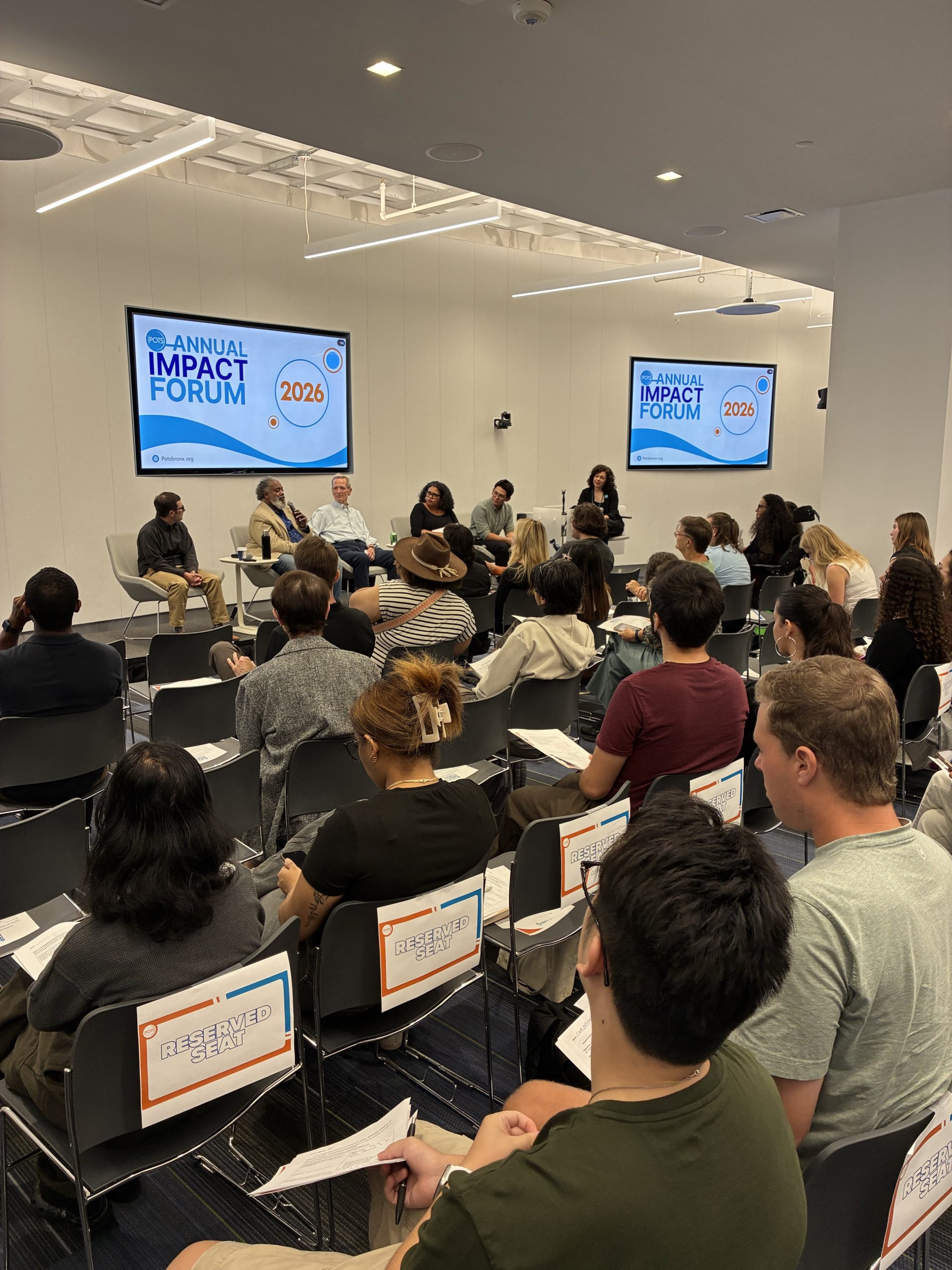
On September 16, Part of the Solution (POTS), in partnership with NYU Wagner, brought together leaders from the nonprofit, academic, advocacy, and creative communities for the 2026 POTS Impact Forum: Partnerships in Action. The conversation explored how collaboration can help address interconnected challenges facing New Yorkers, including mental health, food insecurity, housing affordability, community engagement, and civic participation.
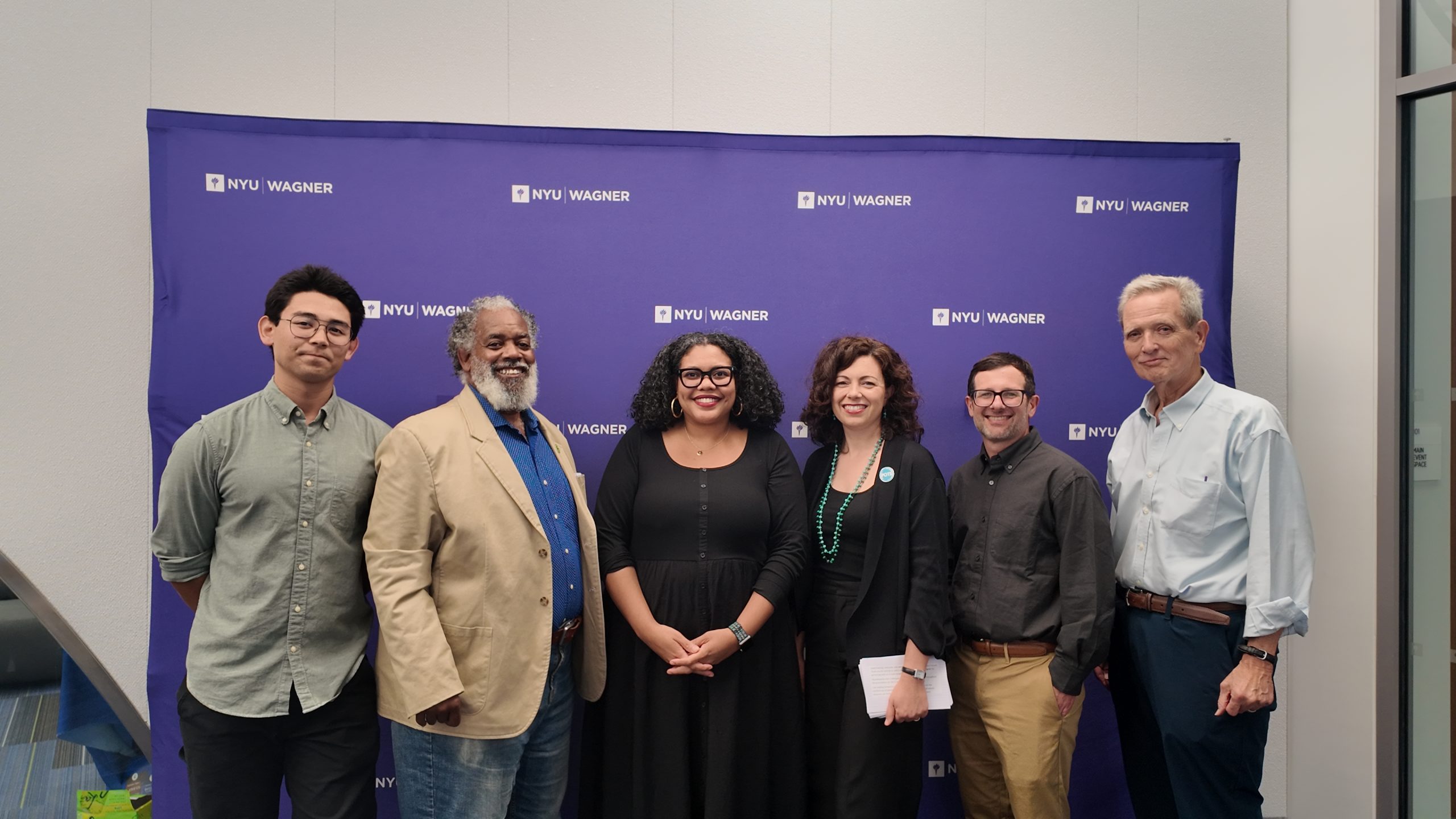
The discussion featured Adam D. Brown, Professor of Psychology and Director of the New School Center for Global Mental Health at The New School; Keith Carr, Senior Policy & Government Relations Manager at City Harvest; Jim Buckley, Executive Director of University Neighborhood Housing Program (UNHP); Judy Pryor-Ramirez, Clinical Associate Professor of Public Service at NYU Wagner; and Liam Rio, NYU Gallatin student and President of Artists in Action. POTS Executive Director Christina Hanson moderated the conversation.
Bringing Mental Health Support Closer to the Community
Adam D. Brown explored how evidence-based mental health strategies can become more accessible by equipping trusted frontline workers and community organizations with tools to support people experiencing stress and other mental health challenges. Drawing from global mental health research and work conducted in partnership with POTS, the discussion emphasized adapting interventions to the culture, circumstances, and priorities of local communities while bringing together researchers, service providers, government, and community voices.
Building a Collective Voice for Food Security
Keith Carr discussed the growing demand facing New York City’s emergency food system and the connection between food insecurity and broader affordability challenges. He highlighted the role of coalition building and advocacy in bringing food pantries, community organizations, volunteers, and other partners together to strengthen the collective voice of New Yorkers experiencing food insecurity and create more opportunities for people to participate in solutions.
Housing Affordability Through Data and Partnership
Jim Buckley reflected on the role partnerships have played in decades of affordable housing and community development work in the Bronx. The conversation explored how collaboration among residents, community organizations, financial institutions, government, and other stakeholders, combined with community-based data, can help identify housing instability, strengthen neighborhoods, and make resources more accessible as rising rents and affordability pressures continue to affect Bronx families.
Moving From Transactional to Meaningful Community Partnerships
Judy Pryor-Ramirez examined how universities and community organizations can work together through community-based participatory research, co-learning, and co-design. Drawing on NYU Wagner’s ongoing partnership with POTS and its Community Advisory Committee, she emphasized moving beyond short-term or transactional relationships toward sustained partnerships that recognize community expertise and give people directly affected by an issue a meaningful role in shaping the work.
Creating Pathways to Civic Engagement
Liam Rio brought a student perspective to the discussion, exploring how young people and artists can participate in their communities through service, advocacy, and creative action. His experience with Artists in Action highlighted the value of sustained relationships with community organizations and an accessible approach to civic engagement in which showing up consistently, contributing where possible, and working alongside others can build meaningful local impact.
Partnership as a Strategy for Lasting Change
Across mental health, food security, affordable housing, research, and civic engagement, a common theme emerged: complex challenges cannot be addressed effectively by organizations working in isolation. Effective partnerships depend on trust, shared purpose, community participation, and the ability to bring different forms of expertise together.
For POTS, these conversations reinforce an approach that recognizes the interconnected nature of stability. Food access, housing, health, financial well-being, education, and community participation influence one another, making collaboration across organizations and sectors essential to creating sustainable pathways forward for Bronx families.
Stay tuned for a recap video from the 2026 POTS Impact Forum, featuring some of the key ideas and perspectives shared by our panelists.